

Out here, the
water is the loudest thing in the room.
Lake Texoma — where most of the homes I design sit, on both sides of the state line.
Scroll
How a lake changes a room
Alake doubles your light. It comes through the windows the ordinary way, and then it comes up off the water a second time — brighter, cooler, and always moving. On a still morning it’s soft. By two in the afternoon it can be blinding. By evening it has gone gold. Same room, three different rooms.
That’s what I’m solving for on this lake. A color that looks right on a chip in my hand at nine can read thin and washed out at two, so I choose finishes with enough depth, and the right undertones, to hold
their color all day. The lake will keep changing the light; the palette has to hold still.
The Texas shore adds its own wrinkle, because the land climbs steep and wooded straight out of the water. One home sits high on a limestone bluff with nothing but sky in its windows; the next is tucked into a cove under the trees, taking green, filtered light all afternoon. Those two homes want different whites — and telling those whites apart is the part of the job I like most. If it’s the land and the building side of the lake you’re after, Ceci Bates tells that half.
The lake will keep changing the light; the palette has to hold still.
Rooms that open to the water
Nearly every home out here is planned around one wall of glass, and that wall decides a great deal. Whatever sits opposite the view is competing with it and will lose, so I keep that side quiet — calm finishes, low contrast — and save the moment that catches your eye for a wall where it isn’t fighting the lake.
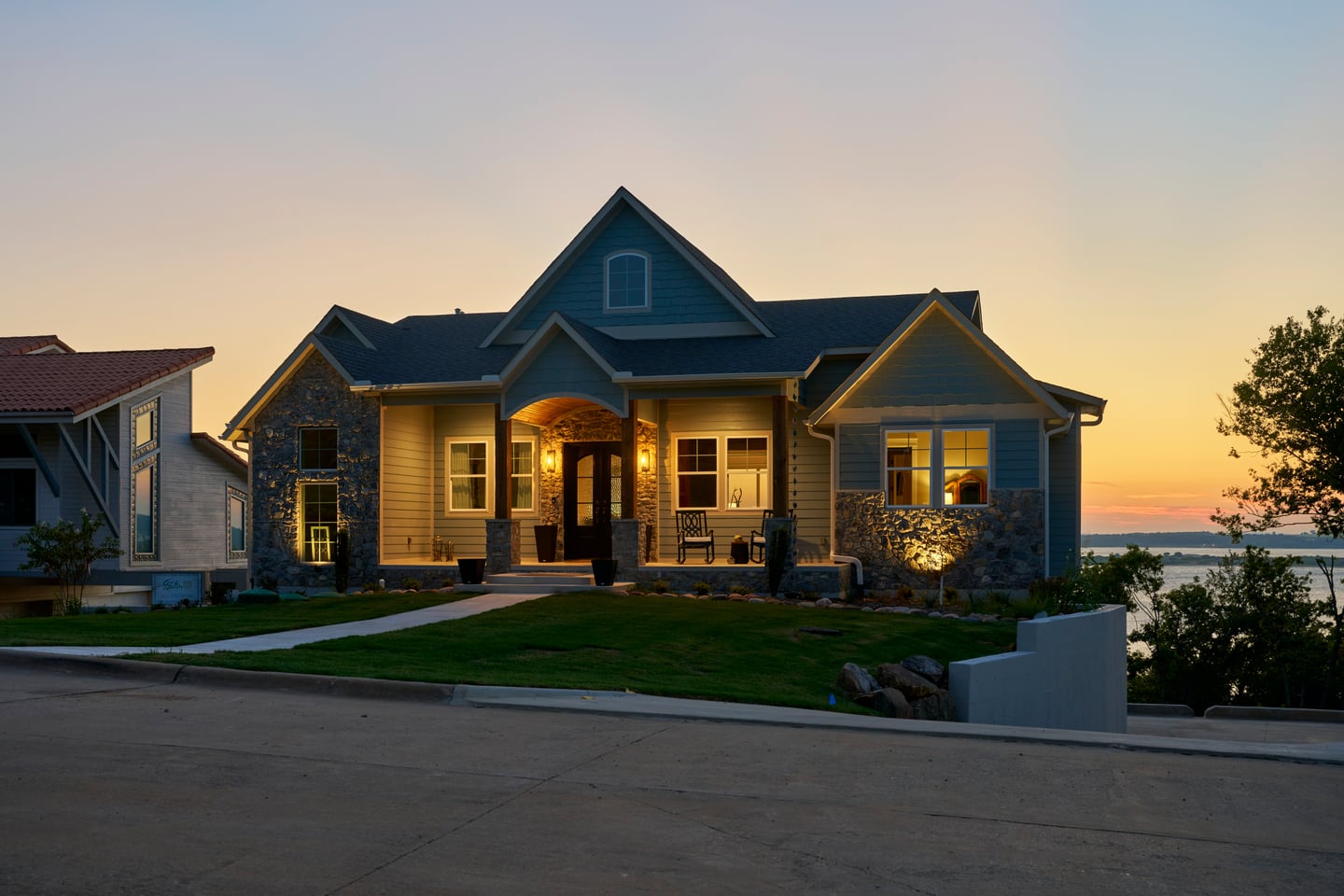
It also means the inside has to look finished from outside. After dark the glass turns into a lit window seen from the yard and the dock, so I think about that view too. On a lake, people see your rooms from the water.
Living half outside
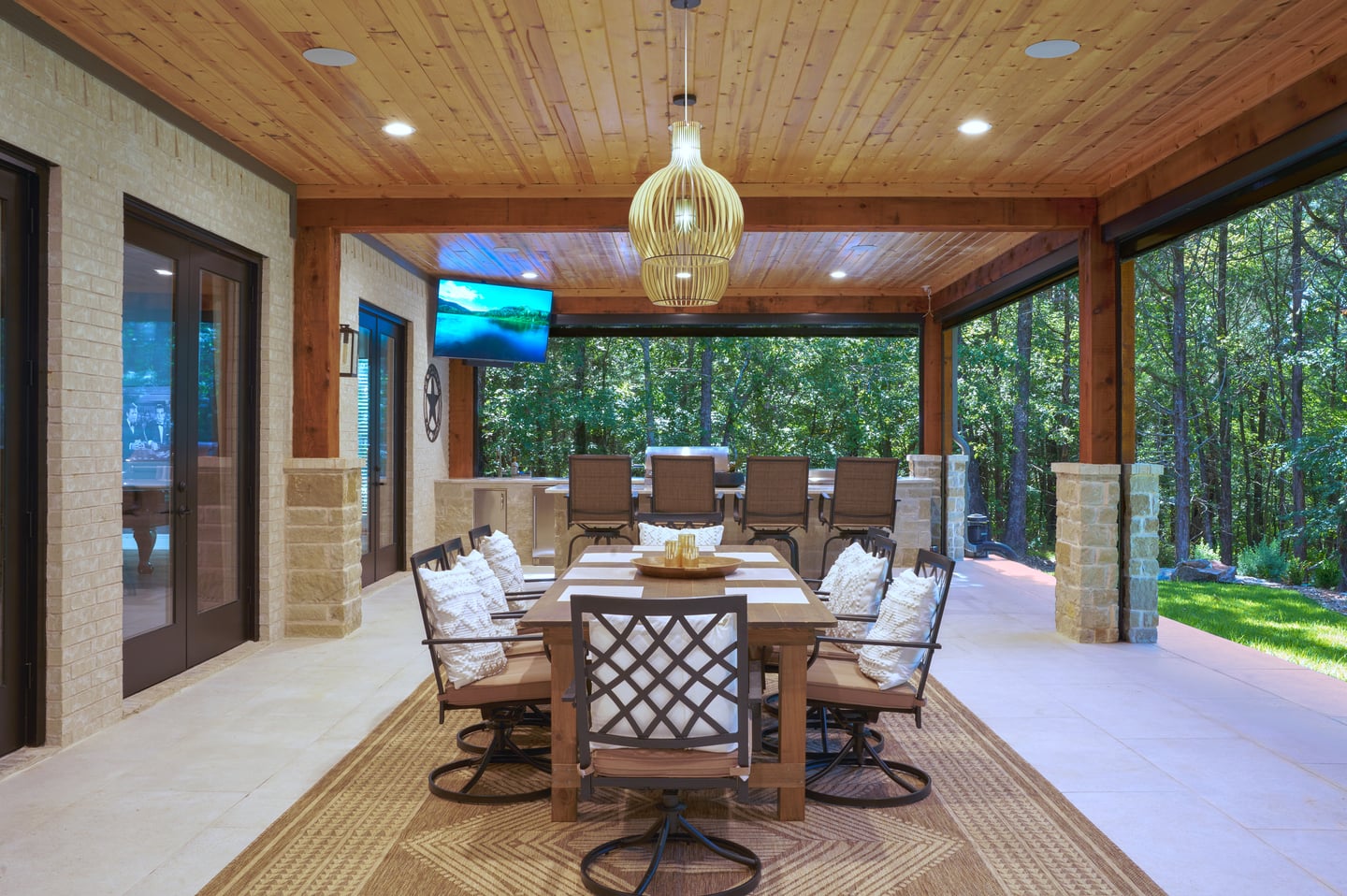
On this lake a good half of the living happens outdoors, so I design the outside with the same care as the inside — outdoor kitchens, fireplaces, screened rooms you can use in August and in October. In one Rock Creek home we ended up with a screened outdoor space with a fireplace and a full kitchen that is still one of my favorite rooms I’ve done, indoors or out. You can see that home here.
I choose the exterior materials too — stone and brick, exterior paint, the roof, even the gutter colors — so the palette carries all the way through. Chosen together, the inside and the outside read as one home instead of two. Here’s the full scope of what I select.
Finishes that can take a lake day
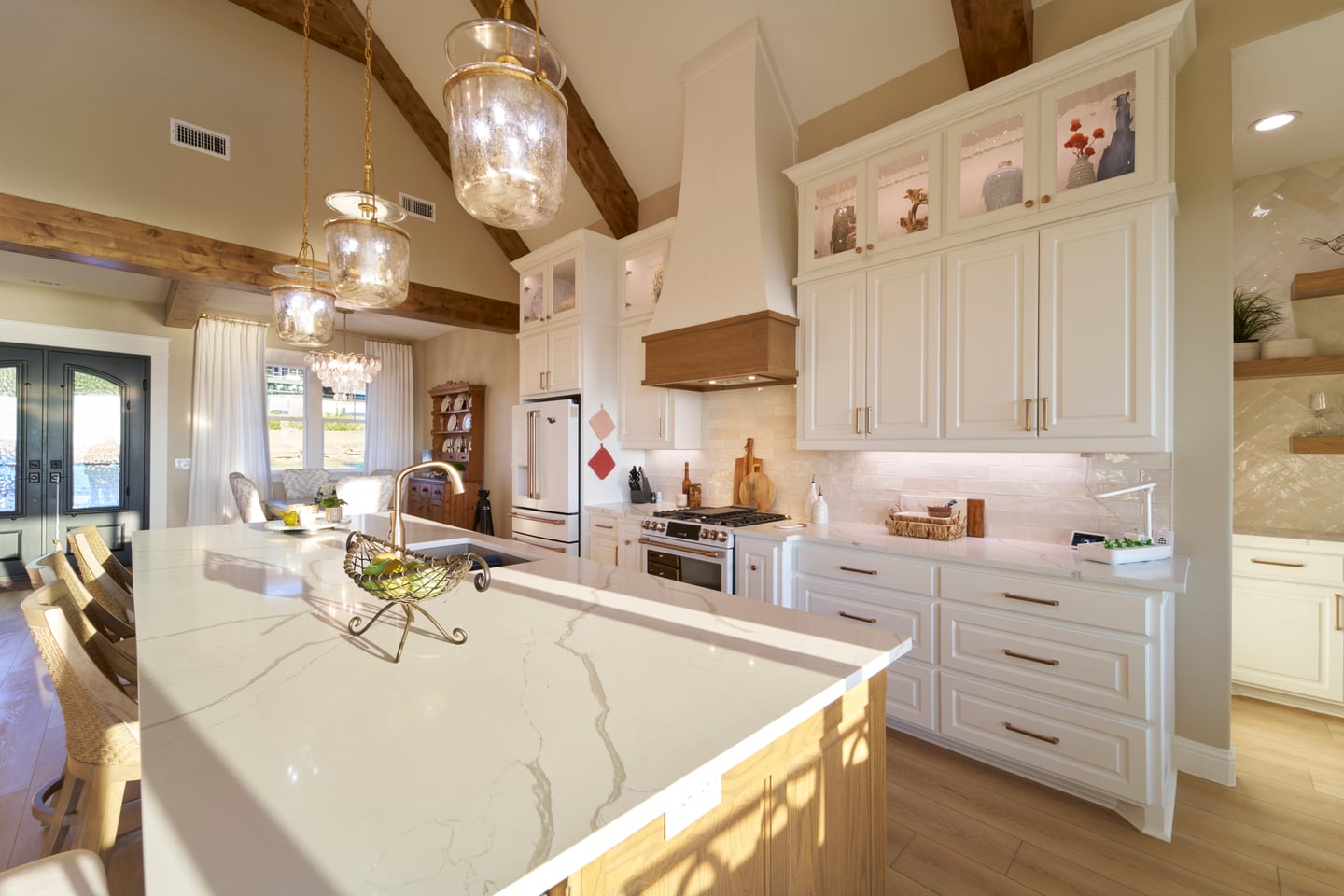
A lake house takes a beating a house in town never does. Wet feet come up from the dock, sand comes in with them, sunscreen gets on everything, and a west-facing wall of glass bakes the same stretch of floor every afternoon. So I plan for it — floors and finishes that don’t show every footprint, surfaces that shrug off water, and colors that hold up under that much sun.
I spent years staining cabinets and putting finishes on walls myself, on real job sites, before I ever chose them for a living. That’s why I know how these materials actually behave once they’re installed, rather than how they look on a sample board under showroom lights. On a lake, that knowledge is the difference between a home that still looks right in five years and one that doesn’t.
The communities on the water
Ceci Bates builds all around Texoma, and well beyond the shoreline too. Each community on the water asks something slightly different of a design — here’s how I think about the ones on the Texas side.
Rock Creek & Gordonville
This is a golf community over in Gordonville that holds its homes to a consistent standard — which suits me, since cohesion is what I’m after anyway. The Grandiose Lakehouse is here: a home built for gathering around a single Taj Mahal quartzite slab, with that screened outdoor kitchen and one darker, swankier bar as its bold room.
See the Grandiose LakehousePreston Harbor
Newer, gated, and still filling in with homes. In a new build here the first thing I want to know is which way the main glass faces — a west-facing wall of windows over the water means hard evening glare for half the year, and that changes the floor I’d choose before it changes anything else.
Pointe Vista
Long views, and usually a lot of glass to take them in. Where the water is that dominant, I put the bold thing — the dark cabinet run, the stone with real movement in it — on a wall you come across as you turn, rather than on the one competing with the lake.
Thompson Heights
Set higher and greener, with real tree cover. Shade sounds like a simple thing, but leaves throw green light into a room all afternoon, and a white that looked clean in the showroom can go faintly sour under it. Here I go looking for whites with a warmer undertone, ones that hold their ground.
Monarch Ridge
Up on higher ground, with long views and a lot of sky in every window. Sky light is cooler than the light coming off the lake, so I warm the interior back up — wood tones, warmer neutrals — and let the view stay the coolest thing in the room.
Three homes on this water
Three of the homes on this site sit on Texoma. The Grandiose Lakehouse is up in Rock Creek, built around that quartzite slab and made for gathering. Stone Retreat is a modern home I softened with warm finishes, with a black geometric-tile fireplace that was a first for me. And the Midcentury House is the boldest of the three — ultra-modern, high-contrast, and unlike anything else out here.
Three different answers to the same water, which is exactly what I love about designing on it. And not every home I work on sits on the lake at all — the towns just inland ask a different set of questions.
Building on the water?
If you have a lot on Texoma — or you’re still choosing between a few — I’d love to hear where it sits and which way it faces. That really is where the design starts: the light you’ll get, the view you’re building toward, and the feeling you want when you come through the door. No pressure, just a conversation.
Tell me about your vision