

Color and materials are the heart of every home I design.
This is the part I love most, and the part I’m known for. Color and undertones, materials and textures, custom stains, the way light moves across a finish — getting all of it to flow as one is where a house starts to feel like your home.
Scroll
I almost always start with the countertop
People are sometimes surprised that I’ll start a whole home with a single slab. But to me a countertop is a piece of jewelry — all that movement and veining, no two pieces alike — and it’s usually the boldest material in the room. So I like to find the one you love first. Once we have it, everything else has something to flow around: the cabinet color picks up its warmth, the tile echoes its veining, the floor grounds it. The home builds outward from the piece you fell for.
Starting there is also how I keep a home from turning into a pile of pretty things that don’t talk to each other — when one anchor sets the direction, every choice after it has a reason. More on why I start there →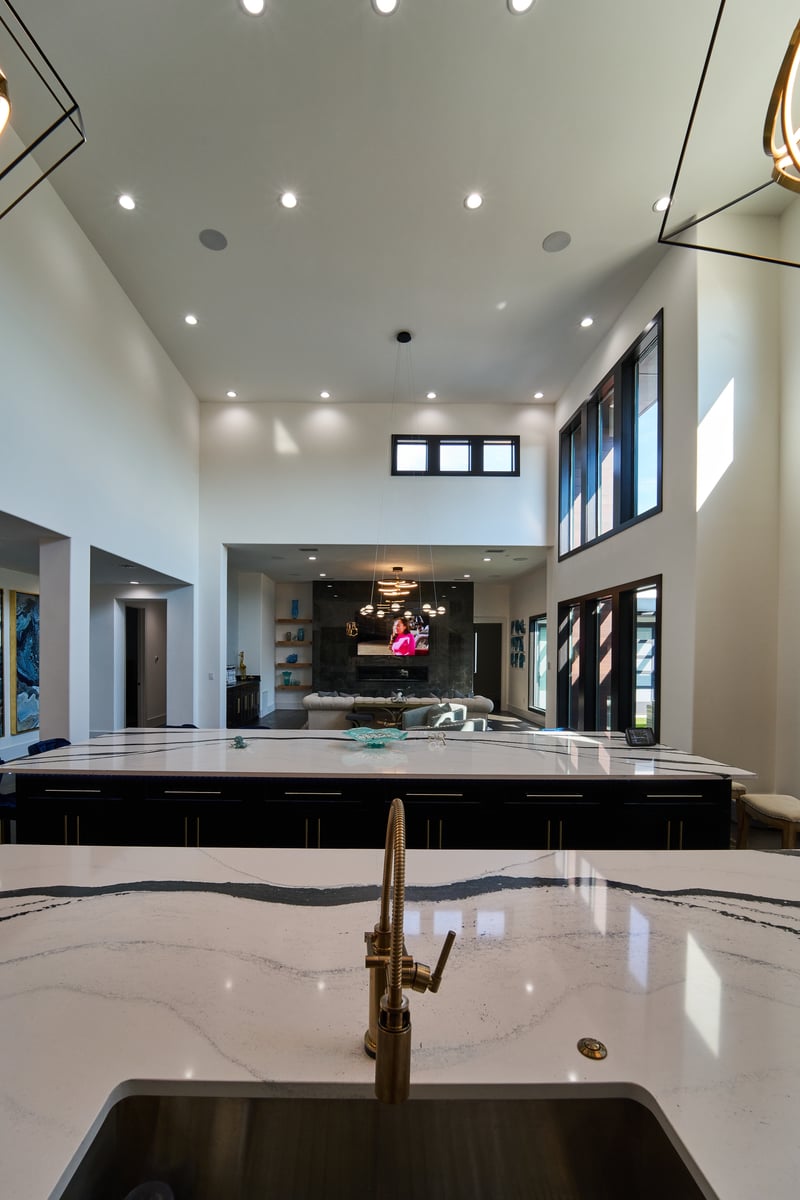
Finding the right white
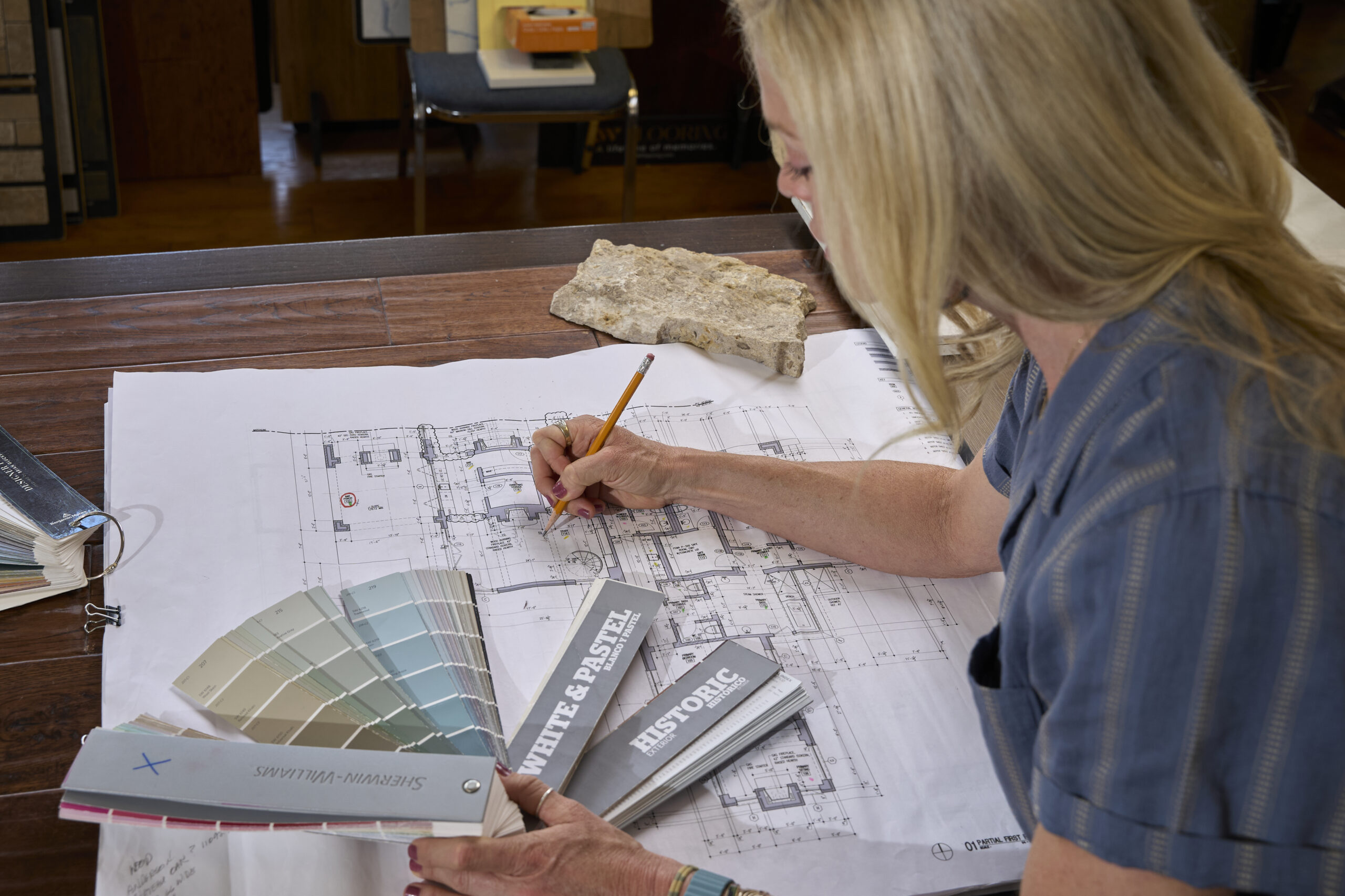
Here’s the thing about white: there’s no such thing as one. There are fifty, and the difference between them is the undertone — the quiet bit of green, or pink, or blue, or yellow hiding underneath. Most people never notice it until a wall goes up and the room feels faintly off, and they can’t say why. I notice it first, because reading undertones is most of what color work actually is.
The same white can read crisp and clean in one home and cold and gray in another, depending on the light it lives in and the materials
around it. So I never choose a white — or any color — off a chip on a desk. I put it up in the actual room, in the actual light, next to the actual stone and cabinets, and I watch how it behaves morning and evening before we commit. The goal is a palette where every neutral agrees with every other one, so the whole house feels calm instead of slightly at war with itself.
Find the slab
you love, and
the whole home
has something
to flow around.
The way a palette comes together
Once we have an anchor, my job is to get everything else to agree with it — not match it exactly, but belong with it. The cabinet finish, the tile, the floor, the metals, the paint, the textures: I’m always asking whether each one makes the others look better or fights them. A palette that flows doesn’t call attention to any single piece; it just feels settled, like it could only ever have been this way. See how a single slab set the palette for one lake house →
I usually start that long before we’re choosing actual products, with a mood board that sets the direction — the colors, the materials, the textures, and the overall feeling we’re after. It’s a way to agree on where we’re headed while everything’s still easy to change, so by the time we’re standing in a showroom, we already know what we’re looking for.
Why I mix my own stains
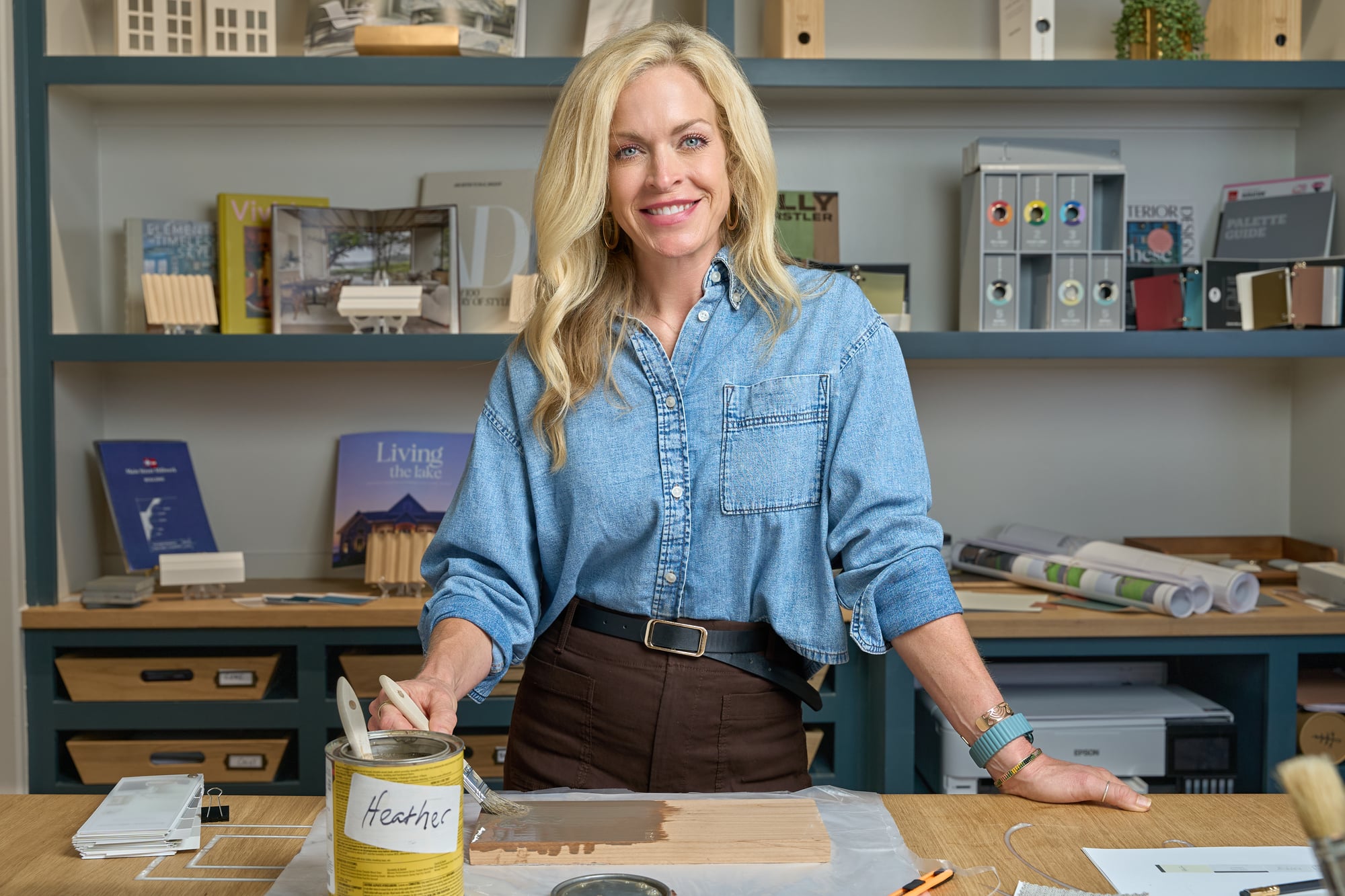
Stain is where my hands-on years really show up. I spent a long time staining cabinets myself, so I know the color you want almost never comes straight out of a can — it’s a mix, and a few drops change everything. So I mix my own. I’ll build a stain to the exact tone we’re after, make up samples on the actual wood we’re using, and we look at them together in the room’s light until one is right.
Then I don’t just hand the shop a color name and hope. I give the trades the formula and a demonstration of how it’s applied — how it’s wiped, how long it sits, how the grain takes it — because the technique matters as much as the mix. It’s how I make sure the cabinets that get installed are the ones we actually chose, not a close cousin.
Light changes everything
The thing I can’t turn off is watching how light moves across a surface. The same stone reads one way by a big window and another way at the back of the room; a paint color you loved at noon can go flat and gray by evening; a tile with any sheen will catch the morning and all but disappear by dinner. None of it is a flaw — it’s just what color and material do in real light — but you have to plan for it instead of being surprised by it.
So I look at everything in the light it’s going to live in. I’ll hold a sample up at the window it’ll sit near, look at it at different times of day, and think about which way the room faces before I let anyone fall in love with it. A north-facing room and a south-facing one want different whites entirely. Getting that right is the difference between a home that feels warm and one that feels a little cold for reasons no one can quite name.
Let’s find your
starting point
If you’re building on Lake Texoma and you already know the stone or the color you can’t stop thinking about, that’s a wonderful place to begin — let’s build the rest of the home around it. And if you have no idea where to start, that’s just as good; finding it together is my favorite part. Either way, there’s no pressure, only a conversation.
Tell me about your vision